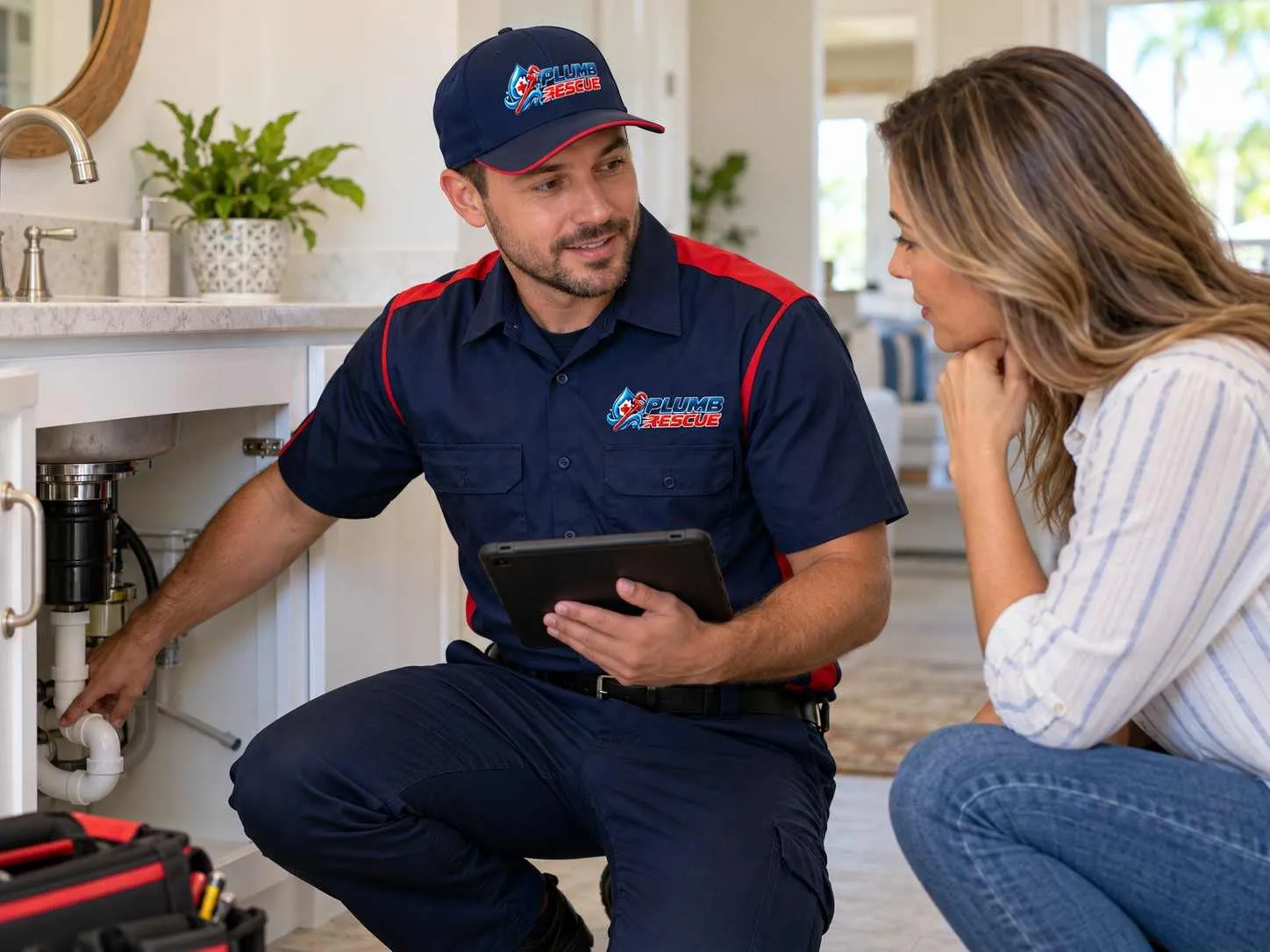
Note the first affected
Note the first affected fixture or room, whether the water is clean or wastewater, and whether the problem is spreading.
Emergency Plumbing Guide
Use a simple order of actions to control water, reduce exposure, identify the affected plumbing, and get the right help.
Emergency plumbing guide
Use the visible pattern to decide what you can safely control now and what information will help identify the next plumbing step.
If the situation changes while you are checking the area, treat the new symptom as important information and avoid continuing to use plumbing that is actively leaking, overflowing, or returning wastewater.
Emergency plumbing guide
The goal is to reduce uncertainty without guessing at a diagnosis. Focus on the affected fixture, water type, scope, and any change in symptoms.
If the situation changes while you are checking the area, treat the new symptom as important information and avoid continuing to use plumbing that is actively leaking, overflowing, or returning wastewater.
Emergency plumbing guide
Note the first affected fixture or room, whether the water is clean or wastewater, and whether the problem is spreading.
Check whether one fixture is affected or several fixtures show similar symptoms.
When you call, give the property location, affected area, visible symptom, and any shutoff action already taken.
Common questions
These answers clarify the immediate decision without replacing an on-site assessment of the actual plumbing system.
Start with the visible symptom, the affected fixture or area, whether water or wastewater is still moving, and whether the problem is limited to one place or several.
Stop using the affected fixture when continued use can add water, wastewater, pressure, or overflow to an active problem. Keep people away from contaminated or electrically unsafe areas.
Explain what changed, where you first noticed it, which fixtures or rooms are affected, and any safe shutoff or containment step you have already taken.
Need plumbing help?
Describe what you can see, which fixture or system is affected, and whether water or wastewater is still spreading.