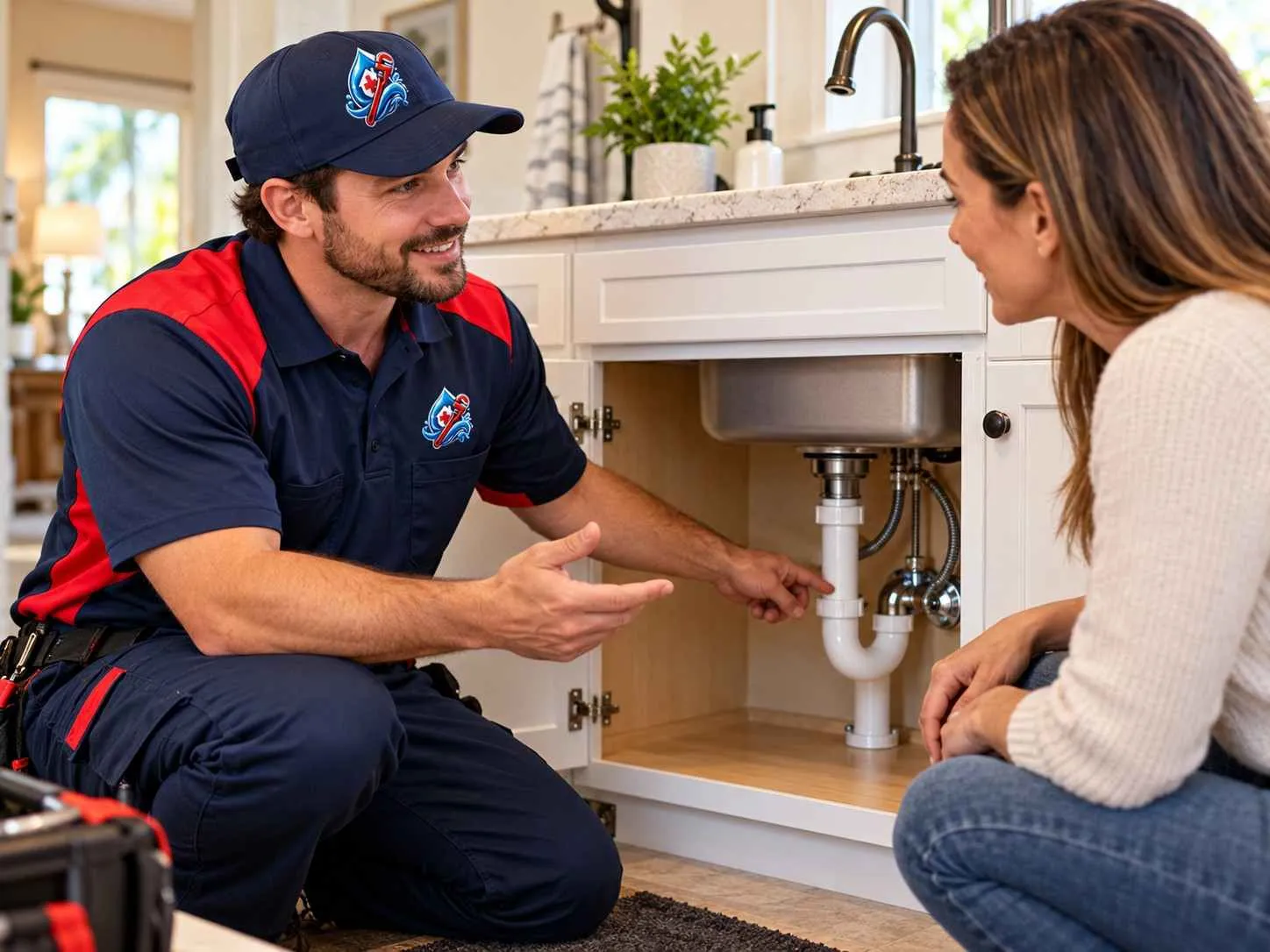
Tank Leaks
Water collecting around the heater can point toward leakage from the tank itself or another component attached to the unit.
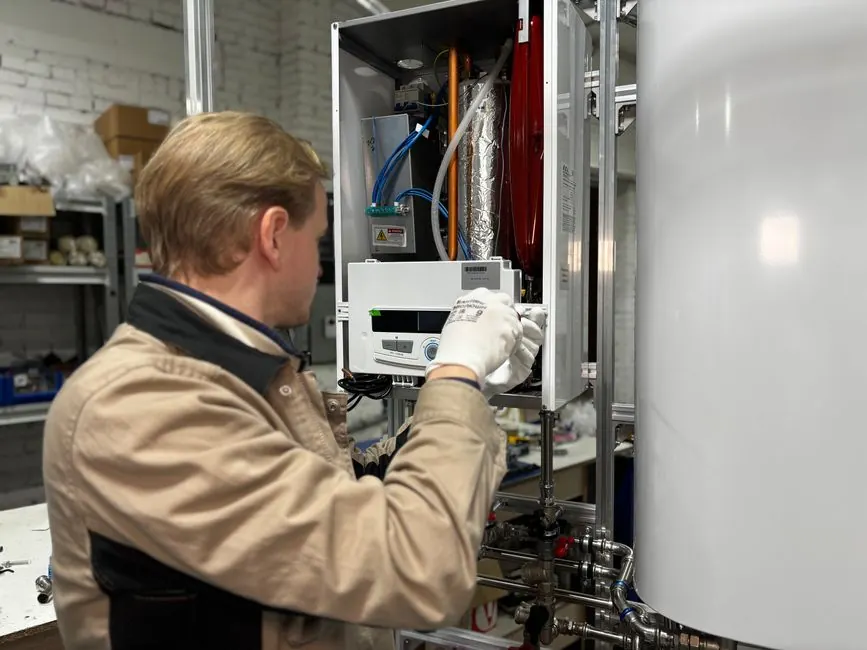
Urgent Water Heater Help
A leaking or failing water heater can interrupt hot water and release water around the tank, valves, or supply connections. Plumb Rescue provides emergency water heater repair in Bradenton, FL, focused on identifying the failure, controlling active leakage, and addressing the affected component.
Emergency plumbing information
Emergency water heater repair focuses on failures that involve active leakage, loss of hot-water function, or problems with components directly connected to the heater. The repair should target the affected tank, valve, connection, or water line.
Water collecting around the heater can point toward leakage from the tank itself or another component attached to the unit.
A leaking or discharging valve can release water around the heater and requires evaluation of the affected valve and surrounding system.
Hot- or cold-water connections can loosen, deteriorate, or fail and release water where the plumbing joins the heater.
A sudden loss of hot water can indicate a water-heater failure that needs evaluation before normal service can resume.
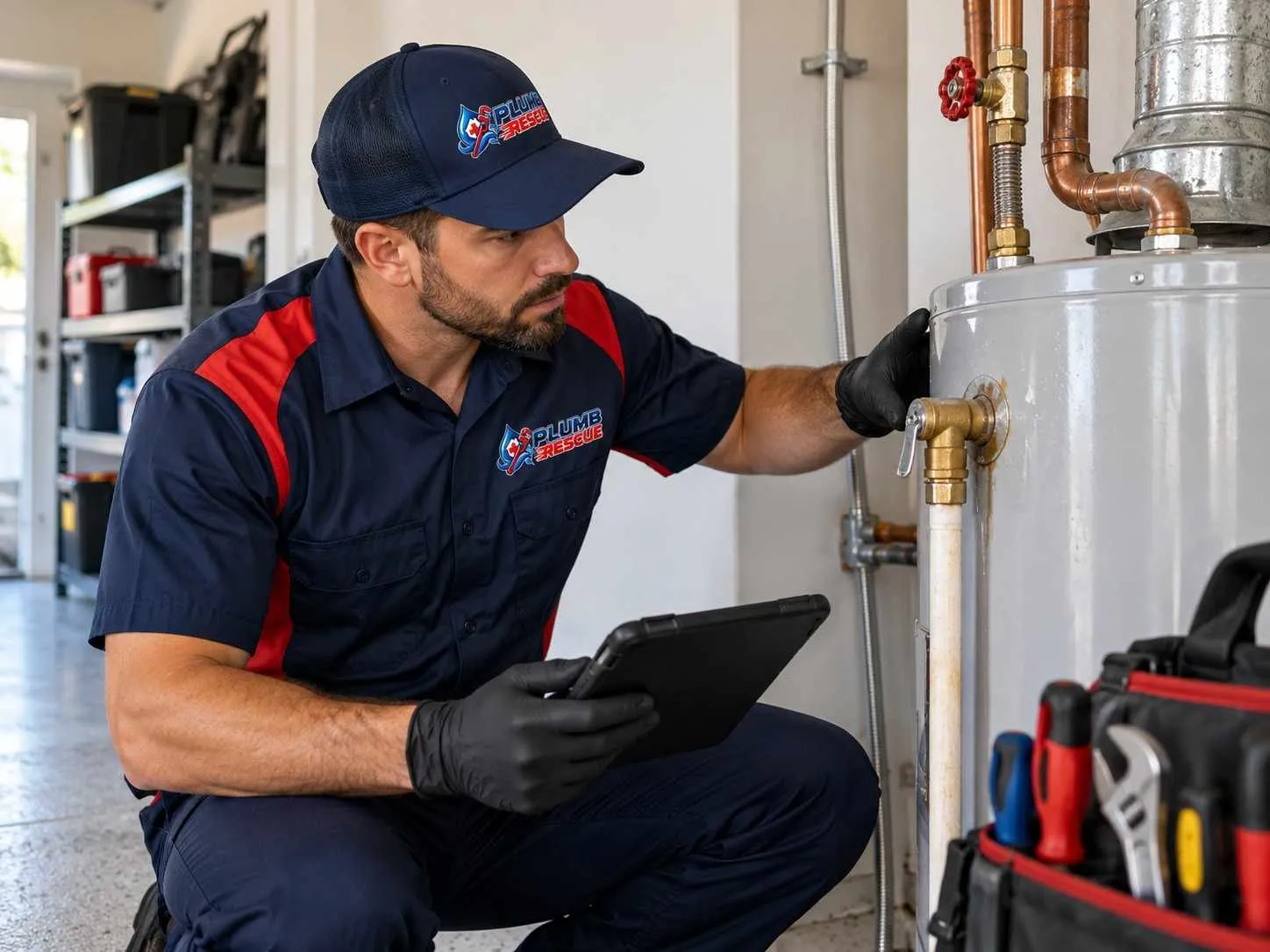
Emergency plumbing information
Not every water-heater issue creates the same level of urgency. Active leakage, uncontrolled water around the unit, or a sudden loss of normal function can require faster attention than a routine performance concern.
Water that continues escaping around the tank, valve, or plumbing connection can spread into the surrounding area until someone controls the source.
A compromised tank can create an ongoing water-release problem that differs from a small leak at an external fitting or connection.
A water heater that suddenly stops delivering normal hot water can disrupt everyday use and signal an internal or connected-system failure.
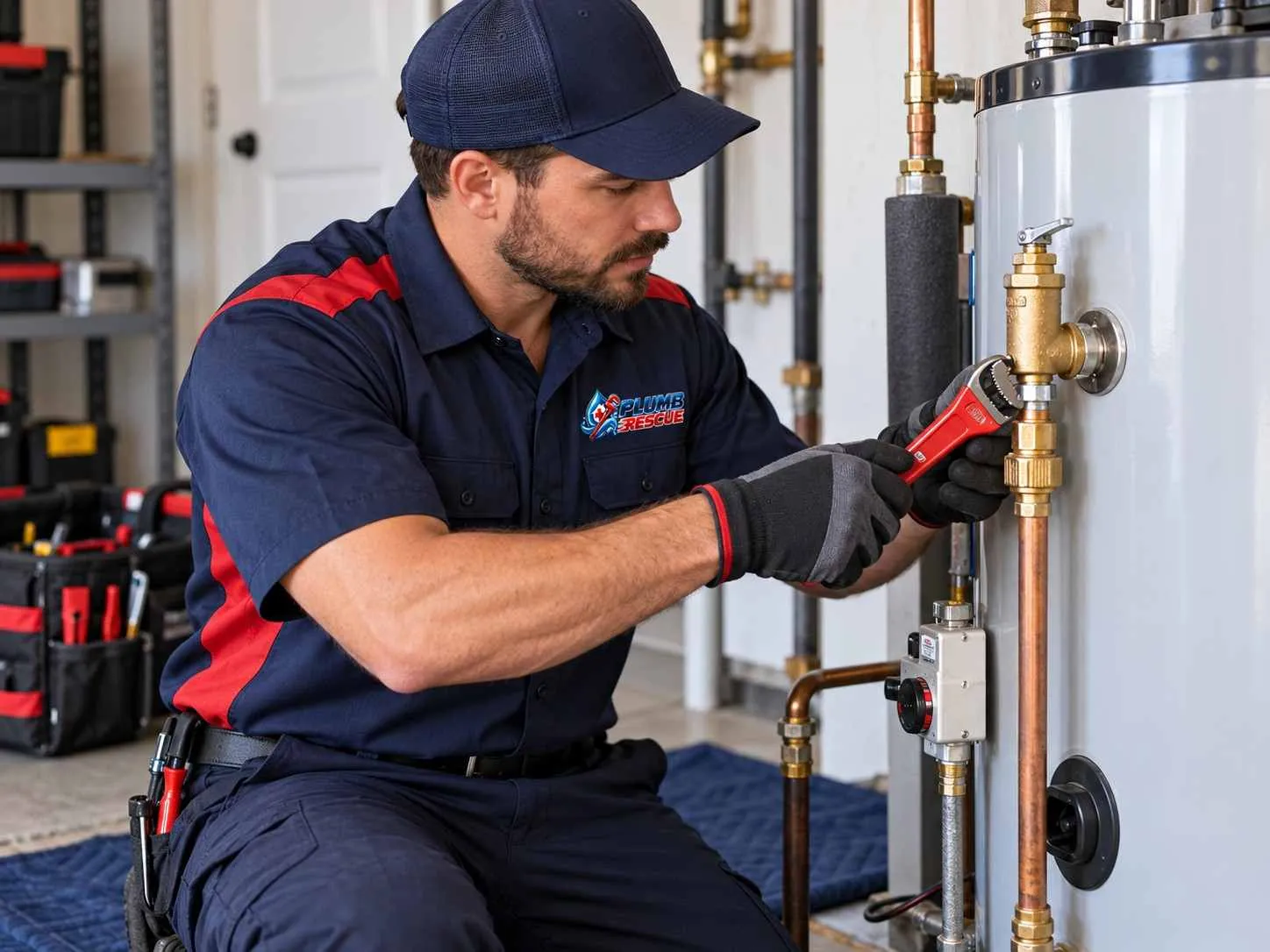
What to expect
Emergency water heater repair should start by identifying whether the problem comes from the tank, a valve, a water connection, or another water-heater component. The repair then follows that specific failure.
The technician examines the heater, surrounding water, connected piping, and visible components to narrow the source of the problem.
The technician controls the water supply when an active leak continues feeding the affected tank, valve, or plumbing connection.
The technician identifies whether the failure involves the tank, relief valve, supply connection, or another serviceable component.
The technician addresses the failed component or connection according to the location and condition of the water-heater problem.
After the repair, the technician checks the affected water path and verifies that the repaired area no longer releases water.
Emergency plumbing information
The correct repair depends on where the failure starts. Water around the heater does not automatically mean the tank itself has failed, so the source needs to guide the repair.
Water coming directly from the tank requires a different decision than moisture appearing around an external valve or pipe connection.
A relief valve that leaks or discharges needs evaluation because the valve forms part of the heater's pressure and temperature safety system.
A leaking hot- or cold-water connection may require attention to the fitting, connector, valve, or adjoining pipe rather than the tank.
The exact point where water appears helps determine whether the repair should focus on the heater body or connected plumbing components.
Emergency plumbing information
Focus first on controlling active water and avoiding unnecessary contact with the unit. Do not assume every puddle around a water heater comes from the same component.
Shut off the heater's water supply if active leakage continues and you can safely reach the correct valve.
Look for visible water around the tank, top connections, relief valve, attached piping, or the base of the unit.
Keep belongings away from the wet area and avoid electrical equipment or connections if water has spread around them.
Contact Plumb Rescue when the heater continues leaking, loses normal function, or the source remains unclear.
For immediate homeowner guidance, see our water heater leak guide.
If you need help stopping the water supply, use the water shutoff guide.
Emergency plumbing information
Emergency water-heater problems can start inside the tank or at a valve, fitting, or supply connection. The visible symptom helps narrow the component that needs evaluation.
Corrosion, deterioration, or another tank failure can allow stored water to escape from the heater body or lower tank area.
A valve can leak, fail to seal correctly, or discharge water around the heater when the component no longer functions normally.
A supply fitting or connector can loosen, deteriorate, or fail and release water where plumbing enters or leaves the heater.
Abnormal pressure or temperature conditions can affect water-heater operation and may involve the relief valve or other connected components.
Emergency plumbing information
Water-heater emergencies usually involve active leakage, sudden loss of function, or a component that no longer controls water normally. The visible location of the problem provides important repair information.
Water collecting around the base of the heater can indicate leakage from the tank or another component draining toward the floor.
Water coming from the relief-valve area can signal a valve or operating-condition problem that needs proper evaluation.
Water around the heater's inlet, outlet, fitting, or nearby pipe can point toward a failed plumbing connection.
A sudden loss of hot water can indicate a water-heater failure that needs evaluation when normal function does not return.
Emergency plumbing information
The source of water around a heater matters because the tank, relief valve, and supply connections perform different functions. Identifying the actual failure prevents the repair from targeting the wrong component.
Water originating from the tank itself changes the repair decision compared with leakage from an external plumbing connection.
A leaking relief valve requires attention to the valve and the operating condition that may be causing water to discharge.
Water from an inlet, outlet, connector, or nearby fitting points toward the plumbing attached to the heater rather than the tank body.
A localized connection problem may need focused repair, while a tank-related failure can require a different service decision.
Common questions
It can be. Active water around the tank, valve, or supply connection can require urgent attention when leakage continues or begins spreading into the property.
No. Water can also come from supply connections, valves, fittings, or nearby piping. The source needs evaluation before deciding which component needs repair.
Shut off the water supply to the heater if you can reach the correct valve safely, note where the water appears, and call for repair.
A relief valve can discharge for different reasons involving the valve itself or the heater's pressure and temperature conditions. The cause needs evaluation rather than guesswork.
Yes, if the loss of hot water is sudden and the heater no longer functions normally. The system needs evaluation to identify the failed component or operating problem.
Emergency plumbing help
A leaking or failing water heater can continue disrupting hot-water service or releasing water around the unit. If the tank, valve, supply connection, or connected plumbing shows an urgent problem, contact Plumb Rescue for emergency water heater repair in Bradenton, FL.